Skip to content
Icons

Paternity Lawyers in Oklahoma

Trusted legal counsel for establishing paternity in Oklahoma – clear guidance to make the process straightforward and stress-free. 

Understanding The Impact of Paternity

Establishing paternity in Oklahoma is an important step in protecting your child’s future and defining your rights as a parent. Whether you’re seeking child support, custody, or simply want legal recognition as a father, establishing paternity protects you and your child’s best interests. 

When paternity is established, a child gains access to crucial benefits — financial support, inheritance rights, health insurance, and a legal relationship with both parents. For fathers, it opens the door to custody, visitation, and an active role in their child’s life. 

If you’re unsure how to begin, it’s best to speak with a paternity attorney in Oklahoma who can explain your options and guide you through the process. Paternity can be established voluntarily by signing an Acknowledgment of Paternity form, through DNA testing, or by a court order known as an adjudication of paternity.  

From completing an acknowledgment to pursuing DNA testing or a court order, legal guidance helps ensure your rights and your child’s best interests are protected every step of the way. 

attorney with paperwork

Ready to Get Started with Establishing Paternity? Schedule a Free Consultation with an Attorney

Call our office or start the process online today. Our team is responsive and ready to help. 

How Establishing Paternity in Oklahoma Works

Connect, Consult, Retain

Reach out to our team to schedule your free consultation. Once you’ve determined if we’re a fit and you’ve retained Ball Morse Lowe as your paternity attorney, you’ll immediately be referred to your new legal team to get started. 

Voluntary Acknowledgment

Both parents can sign an Acknowledgment of Paternity form — often at the hospital after birth or later through the Oklahoma Office of Vital Records. Once filed, this document legally identifies the father and grants him parental rights and responsibilities. However, an acknowledgment of paternity does not automatically grant the father custody or visitation rights to the child. The father will still have to petition the Court to establish custody and visitation. 

Genetic (DNA) Testing

If paternity is uncertain or disputed, either parent — or even the state — can request DNA testing. These tests are quick and highly accurate, and the results can confirm biological parentage before any court orders are issued.

Court Action (Adjudication of Paternity)

When parents disagree about paternity or related issues such as child support or custody, the court can step in to make a legal determination. A judge may order testing, review evidence, appoint a guardian ad litem to conduct interviews and a home study, and issue an official order establishing paternity. 

Legal Orders for Custody and Support

Once paternity is established, parents can move forward with custody, visitation, and child support arrangements. This step ensures that both parents’ rights and responsibilities are recognized under Oklahoma law.

Paternity Frequently Asked Questions

What does it mean to establish paternity in Oklahoma? Establishing paternity is the legal process of identifying a child’s biological and legal father. Once established, both parents gain legal rights and responsibilities — including custody, visitation, and financial support.
Why is establishing paternity important? It protects your child’s rights to support, inheritance, health coverage, and emotional connection with both parents. It also allows the father to participate in important decisions and maintain a meaningful role in the child’s life
When is it necessary to establish paternity?

You may need to establish paternity or work with a paternity lawyer if: 

The parents were never married.  

When a child is born outside of marriage, paternity must be legally established before the father gains rights to custody, visitation, or decision-making. 

Child support or benefits are in question.  

Establishing paternity allows the child to receive financial support, medical coverage, and inheritance rights from both parents. 

Paternity is disputed or uncertain.  

If there’s disagreement about who the biological father is, the court may order genetic testing. A paternity lawyer can help you navigate these proceedings and advocate for your interests. 

You want to secure your role as a parent. 

For fathers, legal recognition is the first step in protecting the bond with your child and ensuring your voice is heard in custody or visitation matters. 

You’ve received—or need to file—a court order involving paternity.
A paternity attorney can guide you through Oklahoma’s legal process, help interpret court documents, and represent your position effectively. 

How can paternity be established in Oklahoma?

There are several ways to establish paternity in Oklahoma, depending on each family’s situation: 

1. Voluntary Acknowledgment
Parents can establish paternity by signing an Acknowledgment of Paternity form — usually at the hospital after birth or later through the Office of Vital Records. Once filed, this acknowledgment becomes legally binding and can only be revoked under limited circumstances. 


2. Presumed Paternity
Under Oklahoma law, a man is presumed to be a child’s father if: 
  • He is married to the mother when the child is born or within 300 days after the marriage ends. 
  • He marries the mother after birth and voluntarily acknowledges the child as his own. 
  • He lives with the child for the first two years of life and consistently represents the child as his own. 
  • If listed as the father on the child’s birth certificate. 
  • This presumption can be challenged through a court process if questions arise about biological parentage. 

3. Court-Ordered Paternity
When paternity is disputed, a court can determine parentage through DNA testing. Either parent — or even the child — may request this legal determination. If the alleged father doesn’t appear in court, a default judgment may be entered. 
Can paternity be established after the child is born?

Yes. Paternity can be established at any time before the child turns 18, though doing so earlier helps secure important benefits and clarify parental rights sooner. 

What if the father’s name is not on the birth certificate?

If paternity hasn’t been legally established, the father’s name can be added to the birth certificate after an acknowledgment is signed, or a court order confirms paternity.

Can a DNA test be required in Oklahoma paternity cases? Yes. If either parent disputes paternity, the court can order genetic testing. These tests are quick, highly accurate, and often essential for resolving questions about parentage. 
How long does it take to establish paternity? The timeline varies. A voluntary acknowledgment can be completed in a few days, while court cases involving disputes may take several weeks or months depending on the situation.
Can paternity be challenged after it’s been established? In limited situations, yes. A challenge must usually be filed within a specific timeframe and supported by valid reasons, such as new DNA evidence or proof of fraud.
What rights does a father have after establishing paternity in Oklahoma? Once paternity is established, the father can request custody, visitation, child support arrangements, and the right to help make important decisions for the child. He also assumes legal responsibility for child support and care.
Do I need a paternity attorney in Oklahoma? While you can handle some steps on your own, paternity law can be complex — especially when there are disputes over custody, support, or testing. Speaking with a paternity attorney in Oklahoma helps ensure your rights are protected, and the process is handled correctly.
Where does Ball Morse Lowe provide Paternity services?

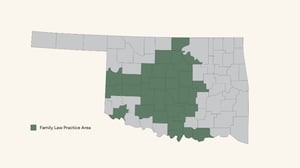
Our Family Law team serves 32 of Oklahoma’s 77 counties. Although our office locations are primarily in central Oklahoma – Oklahoma City, Norman, Edmond, and Stillwater.

We can accept Paternity cases filed in the following counties:  Beckham County, Blaine County, Bryan County, Caddo County, Canadian County, Carter County, Cleveland County, Comanche County, Custer County, Garfield County, Garvin County, Grady County, Kay County, Kingfisher County, Jackson County, Lincoln County, Logan County, Love County, Marshall County, McClain County, Murray County, Noble County, Okfuskee County, Oklahoma County, Pawnee County, Payne County, Pontotoc County, Pottawatomie County, Roger Mills County, Seminole County, Stephens County, Washita County