What types of child custody are recognized in Oklahoma?
In Oklahoma, the primary types of child custody are legal and physical. Legal custody relates to decision-making authority regarding the child's upbringing, including education and healthcare. Physical custody refers to where the child resides.
What’s the difference between legal and physical custody?
In Oklahoma, legal custody refers to a parent’s right to make important decisions about a child’s education, healthcare, and overall upbringing, while physical custody determines where the child lives and who provides daily care. Legal custody can be shared by both parents or granted to one, and physical custody may be arranged so the child primarily resides with one parent or divides time between both homes
How is child custody determined in Oklahoma?
The court considers the child's best interests when determining custody arrangements. Factors such as each parent's ability to provide a stable environment, their willingness to support the child's relationship with the other parent, and their own preferences (if they are of sufficient age and maturity) may be considered.
How do sole and joint custody differ?
Sole custody and joint custody differ mainly in how parental decision-making is shared. Sole custody gives one parent the authority to make major decisions about the child’s upbringing, including education, healthcare, and general welfare—though the other parent still has the right to stay informed and involved. Joint custody, by contrast, allows both parents to share in those key decisions and maintain active roles in the child’s life, requiring cooperation and communication to serve the child’s best interests.
Can joint custody be granted in Oklahoma?
Yes. Joint custody can be granted in Oklahoma if the court determines that both parents are fit and proper to share legal and/or physical custody of the child. Joint custody can be legal, physical, or both, depending on the circumstances.
Can child custody orders be modified in Oklahoma?
Child custody orders can be modified in Oklahoma, but there must be a substantial change in circumstances to warrant a modification. This change could relate to a parent's relocation, a change in the child's needs, or other relevant factors.
What is the role of a mediator in child custody cases?
A mediator is a neutral third party who helps parents come to an agreement on custody and visitation issues outside of court. Mediation can be a helpful alternative to litigation, allowing parents to work together to find solutions in the child's best interests.
When can a child choose who they live with in Oklahoma?
In Oklahoma, a child doesn’t have the legal right to choose which parent to live with, but once they reach about 12 years old, the court may consider their preference as part of the custody decision. The judge will weigh the child’s wishes alongside their maturity and understanding of the situation, always focusing on what best supports the child’s overall well-being.
Can alimony affect a child custody modification in Oklahoma?
Alimony and child custody are separate legal issues, but they can sometimes overlap when a family’s circumstances change after divorce. For example, a change in income, relocation, or a new parenting schedule may raise questions about both financial support and custody arrangements. If alimony is part of your divorce decree, our Family Law team can help you understand how it may relate to your post-decree modification and what steps may be available through family court.
Where does Ball Morse Lowe provide Child Custody services?
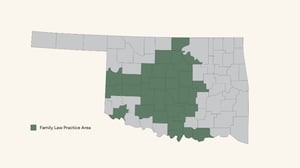
Our Family Law team serves 32 of Oklahoma’s 77 counties. Although our office locations are primarily in central Oklahoma – Oklahoma City, Norman, Edmond, and Stillwater.
We can accept Child Custody cases filed in the following counties: Beckham County, Blaine County, Bryan County, Caddo County, Canadian County, Carter County, Cleveland County, Comanche County, Custer County, Garfield County, Garvin County, Grady County, Kay County, Kingfisher County, Jackson County, Lincoln County, Logan County, Love County, Marshall County, McClain County, Murray County, Noble County, Okfuskee County, Oklahoma County, Pawnee County, Payne County, Pontotoc County, Pottawatomie County, Roger Mills County, Seminole County, Stephens County, Washita County







.png?width=300&name=Website%20Small%20Images%20(12).png)
.png?width=300&name=Header%20Images%20(16).png)

.png?width=300&name=Website%20Small%20Images%20(9).png)
-1.png?width=300&name=Untitled%20design%20(40)-1.png)